


Understanding Genetic Brain Profiling (GBP)

What is Genetic Brain Profiling (GBP)?

Genetic Brain Profiling (GBP) is a scientific approach that helps identify a person’s natural abilities, learning style, and personality all of which are inborn and unique.

GBP is based on the study of fingerprint patterns (Dermatoglyphics) and their relationship with brain lobes and brain functions. Since fingerprints are formed before birth and never change, they provide valuable insights into how the brain is naturally wired.

This helps in understanding an individual’s unique inborn potential and personality. GBP Test Technique has long been developed by scientist Dr. Howard Gardner and medical experts. GBP Analysis will be based on Neuroscience and Multiple Intelligence Theory. Understand your strengths and weaknesses through the GBP Test Report based on Dermatoglyphics and brain analysis.

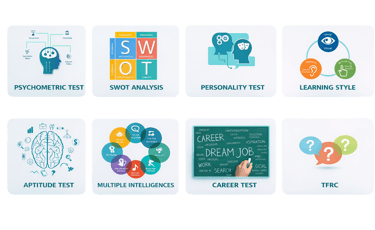
What does GBP examine?

History and Pioneers of GBP

Key milestones in the study of fingerprints, the brain and human potential

1823

Jan Evangelista Purkyně

In his 1823 doctoral thesis, Commentatio de examine physiologico organi visus et systematis cutanei, Purkinje described and illustrated nine principal fingerprint pattern types. This is one of the earliest systematic scientific classifications of fingerprints.

1892

Sir Francis Galton

Galton's landmark work Finger Prints advanced the scientific study of fingerprints by examining their permanence, individuality, inheritance and classification. His work popularized the Arch, Loop and Whorl classification system.

1926

Dr. Harold Cummins

Often recognized as a founding figure in dermatoglyphics, Harold Cummins and Charles Midlo formalized the scientific study of epidermal ridge patterns. More importantly, the term "Dermatoglyphics" was introduced in 1926 to describe the study of the patterned ridges of the fingers, palms, toes and soles.

Cummins later co-authored Finger Prints, Palms and Soles: An Introduction to Dermatoglyphics in 1943, which became an important reference work in the field.

1944

Dr. Julius Spier

Julius Spier explored the relationship between hand patterns and psychological development. His posthumously published work The Hands of Children contributed to the historical development of psychological approaches to hand analysis.

1950s

Wilder Penfield

Neurosurgeon and brain researcher Wilder Penfield advanced understanding of the functional organisation of the human cerebral cortex by mapping relationships between body functions and specific brain regions.

1968

Sarah B. Holt

Sarah B. Holt authored The Genetics of Dermal Ridges, published in 1968. The book examined the genetics and variation of dermatoglyphic patterns of the fingers and palms. A contemporary review in Clinical and Experimental Dermatology specifically describes Holt's 1968 book as an important work on the genetics of dermal ridges.

1980s–Modern day

Educational & Human-Potential Applications

From Dermatoglyphics Toward Individual Profiling or Genetic Brain Profiling (GBP)

Various practitioners and organisations began applying fingerprint and hand-pattern analysis to education, psychology and human-potential profiling. These applications should be distinguished from the established medical and forensic science of dermatoglyphics.

From Fingerprints to Genetic Brain Profiling

SCIENTIFIC NOTE

Dermatoglyphics is an established field of study concerning the patterns of epidermal ridges on the fingers, palms, toes and soles. Historical research has explored these patterns in relation to identification, genetics, anthropology, development and medicine. Applications that attempt to infer personality, learning preferences or cognitive abilities from fingerprint patterns represent a separate area of profiling and should not be confused with the established forensic or medical applications of dermatoglyphics.

What you will recieve?

You will recieve:

Comprehensive report that contains:

  • 🧠 Brain Profile & TFRC Analysis

  • 🔍 Brain Lobes & Learning Sensitivity

  • 👤 Personality & Behaviour Profile

  • 🗣️ Learning & Communication Style

  • 🎨 VAK Learning Styles

  • 💡 Multiple Intelligence Assessment

  • 📊 Intelligence & Strength Distribution

  • 🎯 Extracurricular Activity Recommendations

  • 💼 Career Options & Career Profile

  • 📑 Personalised Analysis & Summary

  • 👩‍🏫 Counsellor’s Remarks

  • 📝 Feedback & Development Guidance

Bright living room with modern inventory

Who can take this test?

Toddlers

From birth through about age three, the human brain forms a vast number of neural connections. During this period, the brain is rapidly developing as it records experiences, sensory input, movement, language sounds, and emotional interactions.

Teenagers

During the teenage years, the brain undergoes a process known as neural pruning. This is a natural and important stage where the brain eliminates weaker or unused connections and strengthens the ones that are used more frequently.

Children

From approximately age four through twelve, the brain begins a gradual process of synaptic pruning. During this stage, the brain works to organize itself by strengthening frequently used neural connections and eliminating excess or unused synapses.

Adults

Adulthood brings a phase where brain development reaches a relative pruning plateau. During this stage, large-scale pruning slows down compared to earlier years, while existing neural connections are maintained, strengthened, or gradually diminished based on use.

How does GBP works?

Transformative Case Studies

Case Study 1

After struggling in school for years, a 15-year-old boy’s GBP (Genetic Brain Profiling) report revealed that he was a kinesthetic learner who excelled in hands-on activities. After shifting his learning methods, he improved his grades and confidence dramatically.

From Struggling Student to Academic Achiever

Case Study 2

A young professional was stuck in a stagnant career. GBP (Genetic Brain Profiling) revealed her natural leadership and strategic thinking skills. After coaching and a career change, she now leads a successful team and feels more aligned with her work.

Unlocking Leadership Potential

Case Study 3

A parent used GBP – Genetic Brain Profiling for all three of their children. The results helped the family understand each child’s unique personality, improving communication and reducing conflicts within the household.

Enhancing Family Dynamics

See What Customers Say About Genetic Brain Profiling

Click here to see their testimonials

© 2016–2026 Doms Consultancy Sdn. Bhd. All rights reserved.